
Student Research Support Grant
The Dental Anthropology Association (DAA) is excited to announce a new funding opportunity for undergraduate and graduate scholars. The Student Research Support Grant will be awarded annually to advance independent student research. Eligible projects may focus on any area in dental anthropology, including oral anatomy/development, paleoanthropology, diet, health, bioarchaeology, forensics, dental evolution, morphology/metrics, biogeochemistry, or any field that draws upon dental data. Funding can be applied to projects in-development or to ongoing studies as a stopgap to support expenses not covered by other funding sources. Funding cannot be used to support conference travel.
In the 2025-2026 cycle, the DAA will award $500.00 grants and one-year association memberships to three student applicants. Grantees will also have their research featured on the DAA website and in a short profile in Dental Anthropology, the association’s journal. Grantees are required to submit a short report (one-page or less) that includes the following: 1) information on how funds were spent to support research, 2) the impact of the grant on their academic and/or professional development, and 3) a one paragraph summary of their grant-related research tailored to a general audience to share on the DAA website and/or social media. This report is due one year after receipt of funds, which must be spent in the 12-month award period.
The student applicant must submit the proposal form (completed in English) to the Chair of the Student Prize Committee. The applicant must also submit a formal letter of support from their research supervisor, confirming that the student is actively enrolled in an (under)graduate program and that they have reviewed and approved the student’s proposal. These materials will be evaluated by the Student Prize Committee and by at least one topical expert following the attached rubric.
Inquiries, proposal forms, and supervisor letters should be emailed to:
Dr. Erin Blankenship-Sefczek
Chair, DAA Student Prize Committee
Department of Oral Biology, School of Dentistry
ErinBlankenship-Sefczek@creighton.edu
Applications and supervisor letters must be received by January 31, 2026 to be considered for the 2025-2026 Student Research Support Grant.

2026 Awardees

Doctoral Student, University of Pennsylvania
With support from the DAA through the student research grant, I will be examining covariation in pelage microstructure and mechanical properties, and anterior dental morphology in non-human primates, with and without a tooth comb. This study will form the basis of pelage and grooming inferences in extinct species and provide preliminary data for my dissertation project.

Doctoral Student, Louisiana State University
Using both modern primate and fossil hominin molars, Hannah’s dissertation research explores how tooth wear shaped the way early hominins processed food. By combining dental microwear texture analysis, dental topographic analysis, and biomechanical approaches, she examines how enamel loss alters mastication and what this means for dietary reconstruction. Her research refines interpretations of dietary ecology, variability, and functional resilience within South African hominins.
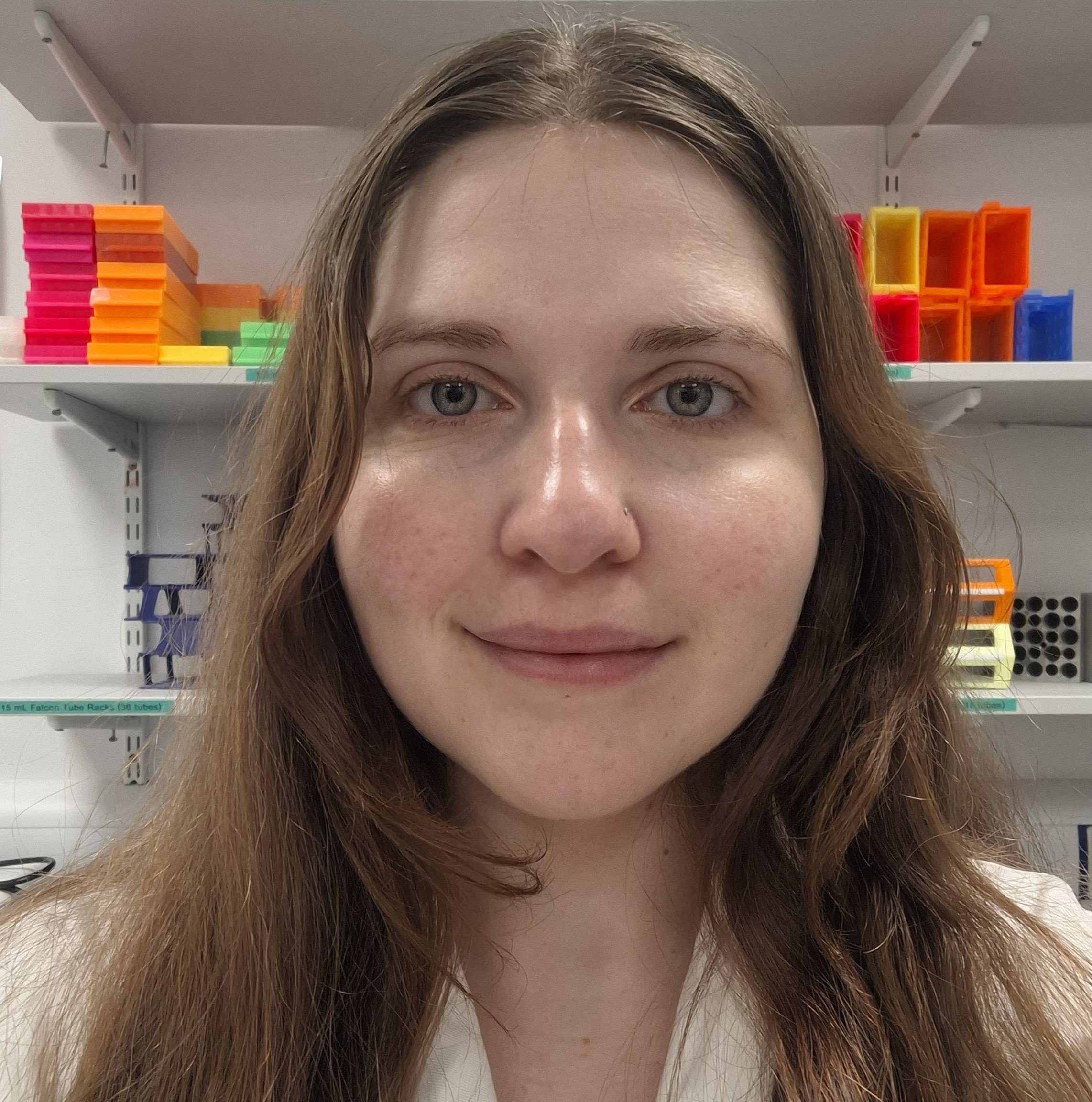
Doctoral Student, Durham University
I am very excited to have been awarded the DAA Student Research Support Grant, to expand on my PhD research project on heavy metal exposure in antiquity!
By conducting trace element analysis on dental enamel from late-forming teeth to measure in-vivo concentrations of heavy metals, metalloids, and essential elements such as lead, arsenic and zinc, and by tying this data to palaeopathological evidence, my project aims to help better understand the societal and health impacts of heavy metal exposure in Northern England over a timespan of approximately 1000 years.
Thanks to the generous financial support by the Dental Anthropology Association, I will be able to cover further analytical costs related to my project, and obtain additional trace element data from multi-period archaeological sites in Yorkshire